⚠️ THE CAPTAIN’S WARNING: If you are looking for a “push-button” magic trick to make $10k overnight, leave now. That is “Kiwiboy” thinking, and it leads to the Lake of Fire. If you want the mechanical blueprint for building a sustainable engine, welcome aboard.

I can still smell the ozone in the air.
Back in the day, before I was “OrGainIt,” I was just a guy on a deep-sea fishing boat trying to crack the code of the internet. I treated affiliate marketing like a slot machine. I pulled the lever, spun the content spinners, and prayed for a payout.
I built an empire on sand. And when the Google Panda storm hit, it didn’t just get wet—it got wiped off the map.
That was my “Lake of Fire.” It burned away the laziness. It burned away the “Kiwiboy” inside me who wanted something for nothing.
Today, we face a new storm: Artificial Intelligence.
Most people are using AI the same way I used those old spinners. They are flooding the web with garbage, hoping to trick the algorithm. They are building on sand again.
But you? You are going to build on rock.
What is AI Affiliate Marketing? It is not a cheat code. It is a power tool. It is the difference between digging a foundation with a spoon and digging it with an excavator. But you still need a Foreman to operate the machine.
This is the mechanical guide to how we do it. No fluff. No hype. Just the schematic.
📋 Mission Manifest: The Flight Plan
- ⚓ 1. The Definition: What AI Actually Does (The Engine)
- ⚓ 2. The “Kiwiboy” Trap: How to Get Banned Fast
- ⚓ 3. The Schematic: The 3-Step Mechanical Process
- ⚓ 4. The Safety Inspection: E-E-A-T & The 2026 Reality
- ⚓ 5. The Tool Locker: What You Need in Your Belt
- ⚓ 6. The Future: Where the Current is Heading
- ⚓ 7. The Safe Harbor: Where to Build Your Ship
1. The Definition: What AI Actually Does (The Engine)
Think of a car factory. In the old days, men hammered every panel by hand. Today, robots do the heavy lifting, but humans inspect the welds.
That is what we do.
We don’t ask AI to “write me a blog post.” That produces generic fluff. We use AI to:
- Analyze Intent: Scan thousands of search queries to find exactly what the user is asking.
- Structure the Hull: Build outlines that cover every angle of a topic.
- Draft the Raw Materials: Generate the first draft of the text.
- Optimize for Conversion: Use data to tweak headlines and calls to action.
But the Soul? The stories? The “I was there when…” moments? That comes from you. That is the “Unfair Advantage” that a robot cannot copy.
If you are new to this, start with my guide on AI Affiliate Marketing for Beginners. It breaks down the basics before we get into the heavy machinery.
2. The “Kiwiboy” Trap: How to Get Banned Fast
I see it every day in the forums. A new guy comes in, eyes wide, shouting: “I just generated 500 articles in one hour! I’m going to be rich!”
I shake my head. That is “Kiwiboy” talking.
Google’s algorithms in 2026 are smarter than you. They are looking for Information Gain—new value. If you just vomit out the same AI text as everyone else, you are adding noise to the signal.
The Result?
- Your site gets de-indexed.
- Your affiliate accounts get closed for “low-quality traffic.”
- You waste months building a ghost town.
“He who builds on sand, builds for the storm.” We don’t do that here. We build Affiliate Marketing Websites that are designed to last for decades, not weeks.
3. The Schematic: The 3-Step Mechanical Process
So, how do we do it right? We follow the blueprint. We treat content creation like an assembly line.
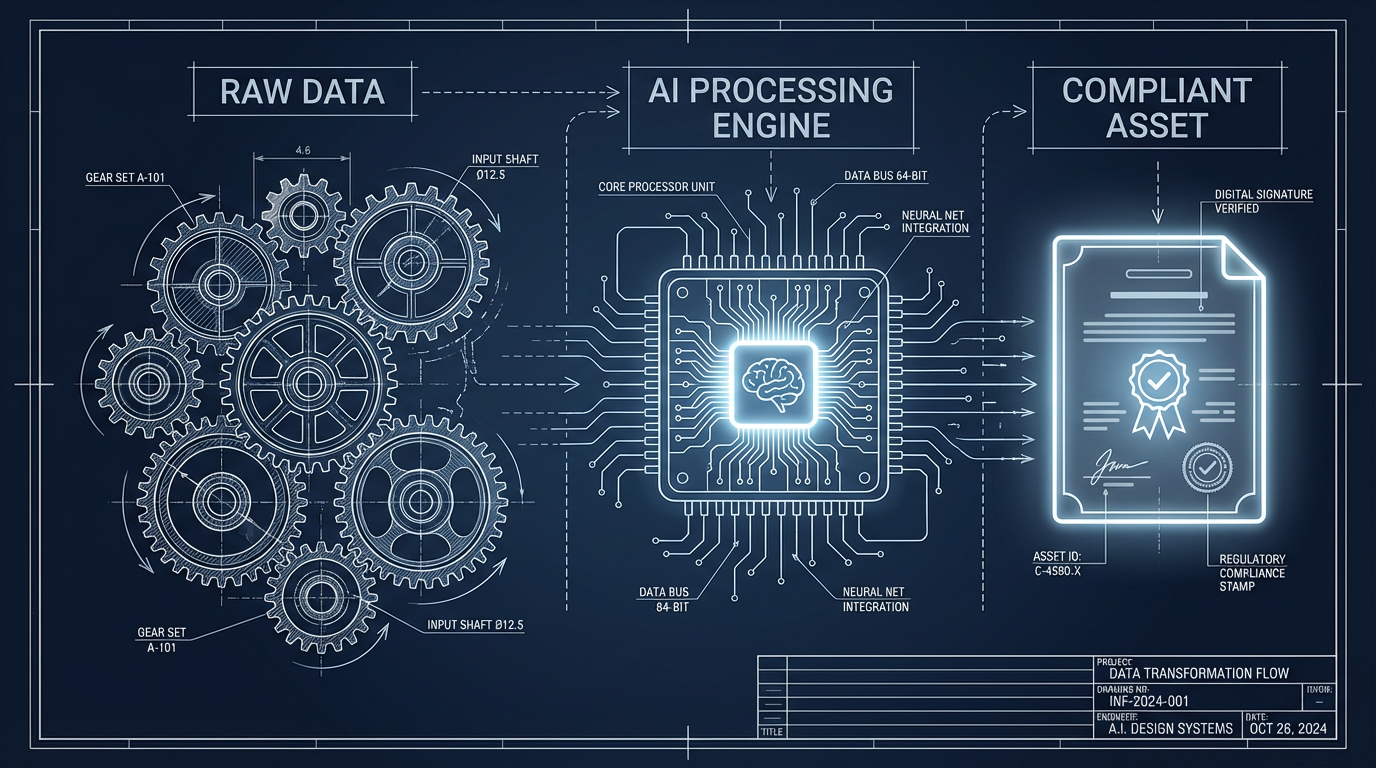
Step 1: The Raw Data (The Ore)
We start with AI-Powered Keyword Research. We don’t guess what people want; we use tools to find the specific questions they are asking into their phones at 2 AM.
We look for “Long-Tail Keywords”—specific phrases like “best AI tool for health affiliate marketing” rather than just “AI tools.” This is where the gold is buried.
Step 2: The Processing Engine (The Machine)
We feed that data into our AI tools. We use specific prompts—our “Code”—to shape the output. We tell the AI to adopt a persona, to use specific formatting, and to avoid “fluff words.”
For example, if you are writing about software, you might use a tool like Junia AI or Pictory AI to generate the initial draft or video script. But you never publish it raw.
Step 3: The Compliance Check (The Finish)
This is where the money is made. You, the Foreman, step in. You add the internal links. You add the personal story. You verify the facts. You turn “Content” into an “Asset.”
We use AI-Powered Conversion Optimization to ensure that once the traffic arrives, it actually clicks the button. Traffic without conversion is just vanity.
4. The Safety Inspection: E-E-A-T & The 2026 Reality
In the meat plant, if a carcass didn’t pass inspection, it didn’t ship. Period.
Your content is the same. Google uses a standard called E-E-A-T (Experience, Expertise, Authoritativeness, Trust). In 2026, they have dialed up the “Trust” factor to 11.
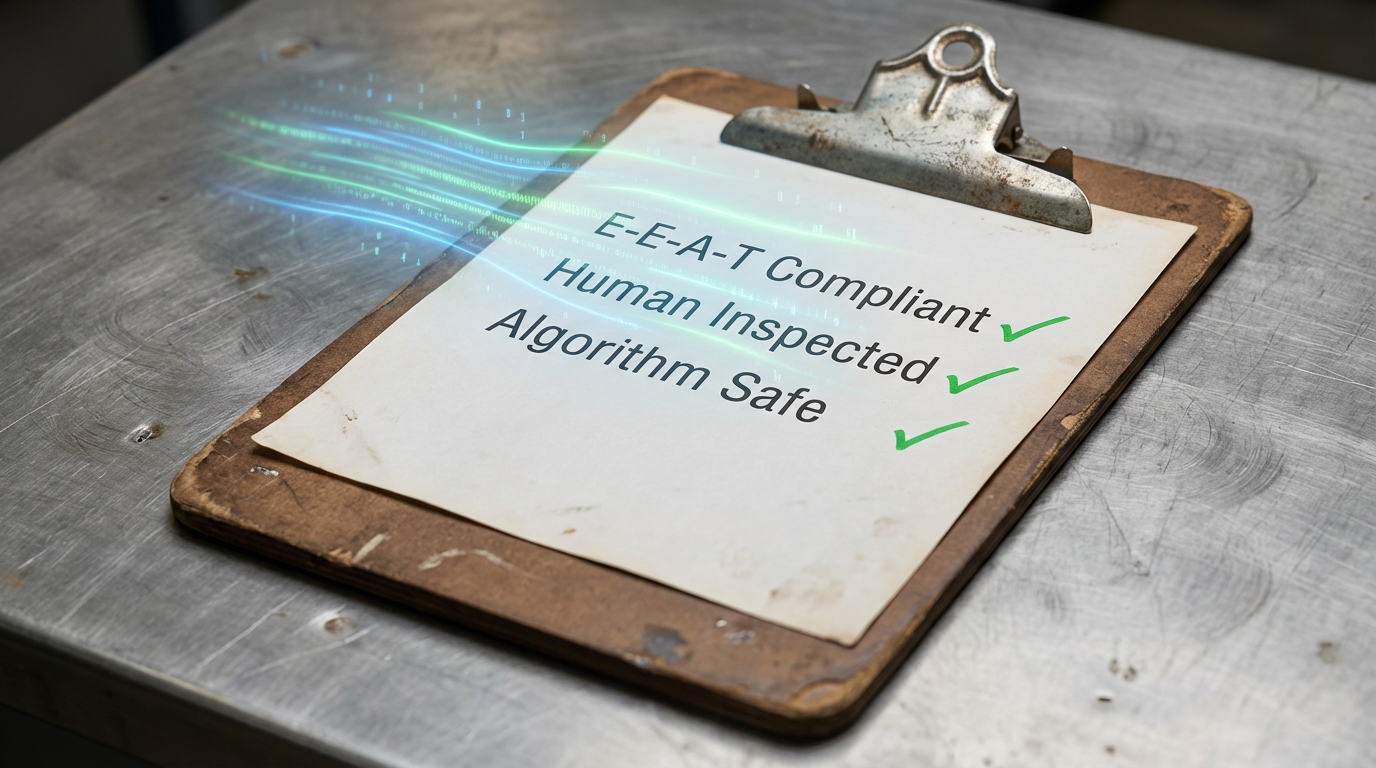
Before you hit publish, you must ask:
- Is there a human face here? (That’s why my face is on this page).
- Is there real experience? (That’s why I told you about the fishing boat).
- Is it safe? (Did I check the affiliate links and the advice?)
If the answer is no, send it back to the grinder. You can read more about my specific strategies in AI Affiliate Marketing Strategies.
5. The Tool Locker: What You Need in Your Belt
A mechanic is only as good as his wrench. You don’t need 50 tools; you need the right ones. Here is what I carry in my AI Tool Locker:
The Brain (Text Generation)
For writing, I use tools that understand context. ChatLLM is a powerhouse for productivity, helping me outline and draft faster than ever.
The Eyes (Visuals & Video)
Video is king in 2026. I use InVideo AI and Jogg AI to turn my text articles into engaging video content for YouTube and social media. If you need avatars, Pollo AI is another tool I’ve inspected.
The Specialist Tools
Sometimes you need a specific tool for a specific job. For example, Covert Commissions helps with managed affiliate campaigns, while AI Profit Scoop can help uncover hidden niches.
6. The Future: Where the Current is Heading
The ocean is changing. We are moving beyond simple text. The Future of AI is about Agents and Personalization.
We are seeing the rise of Conversational AI, where users don’t just search; they talk to their search engines. If your content doesn’t answer questions directly, you will be invisible.
We are also seeing Industrial AI Systems trickling down into marketing, automating complex workflows that used to take weeks.
Even customer service is being revolutionized. AI Customer Engagement and AI Customer Loyalty tools are allowing affiliates to build real relationships with their audience at scale.
7. The Safe Harbor: Where to Build Your Ship
You can have the best blueprints in the world, but if you try to build a ship in a swamp, it will sink.
I have tried every hosting platform and “guru” system out there. Most of them leave you stranded when things get technical. They don’t care if your plugin breaks or your site gets hacked.
I build my assets in one place: Wealthy Affiliate.
Why? Because they integrated the “Safety Inspection” into the platform. Their “Hubs” technology uses AI to help you research and draft, but it forces you to follow the structure that Google loves. It is a dry dock for serious shipbuilders.
You can read my full inspection here: Wealthy Affiliate Review 2025.
⚓ Permission to Board?
Stop trying to figure this out alone. Get the tools, the hosting, and the community that has been surviving online storms for 20 years.
Create Your Free Test Account Here »
(No credit card required. Just an email and a work ethic.)
Final Orders
The storm is always out there, mate. The algorithms will change. The tools will update. But the principles? “He who plants and he who waters are one.”
Build on rock. Serve the user. Inspect your work.
Now, go turn that machine on.
– Captain Robert “OrGainIt” Lees




I like the way you approached this topic. The message about using AI as a tool rather than relying on it completely is very realistic. It’s easy for people to get excited about automation and forget that real value still comes from experience and thoughtful work. The examples you shared about learning from past mistakes make the article feel more genuine. It’s a good reminder that long-term success online usually comes from patience, learning, and improving over time, not just chasing quick results.
Cheers, Monica. You hit on the absolute critical point: Realism.
Right now, the SERPs are a minefield. I am seeing Google de-index lazy AI affiliate sites daily. They are cracking down hard on the ‘push-button’ spam, and honestly, most people aren’t even noticing until their traffic hits zero.
That is exactly why we have to stay in the loop. If we treat AI as a replacement for our experience, we become targets. But if we use it as a power tool—like you said—we can build something that actually survives the next algorithm update.
Good to have you on deck. We keep the standards high so the ship stays afloat!